Studio Planning Guide
A simulator can function in a space —
and still fail to perform as expected.
INTRODUCTION
Many spaces can physically accommodate a simulator.
But performance, comfort, and long-term usability are determined by how the environment is configured.
Most simulator setups begin with equipment and attempt to make it work within the space.
This guide takes the opposite approach.
It begins with the space the system must operate within.
__________________________________________________
WHATS NEEDED:
• Tape measure
• A golf club (driver recommended)
• A notepad or phone to record measurements


Authentic Indoor Golf — Deliberately Engineered.
For serious golfers building indoor golf environments — designed with intent.
PERFORMANCE EXPECTATIONS
Not all indoor golf environments are built for the same purpose.
Some support casual use.
Others are designed for consistent practice, instruction, or performance development.
Your expectations determine how each constraint impacts the space.
A setup that works for casual use will feel restrictive for full-swing practice.
A space suitable for occasional use will fall short for instruction or training.
Clarity on intended use defines what the environment must support.


Types of Indoor Golf Environments
Indoor golf spaces generally fall into three categories:
• Entertainment environments —
prioritize ease of use and shared experience
• Practice environments —
focus on repetition, feedback, and skill development
• Performance environments —
support full swings, ball flight accuracy, and consistent training
___________________________________________________________________________________
What your space can support depends entirely on its physical constraints.
Some spaces support a complete indoor golf environment.
These typically require:
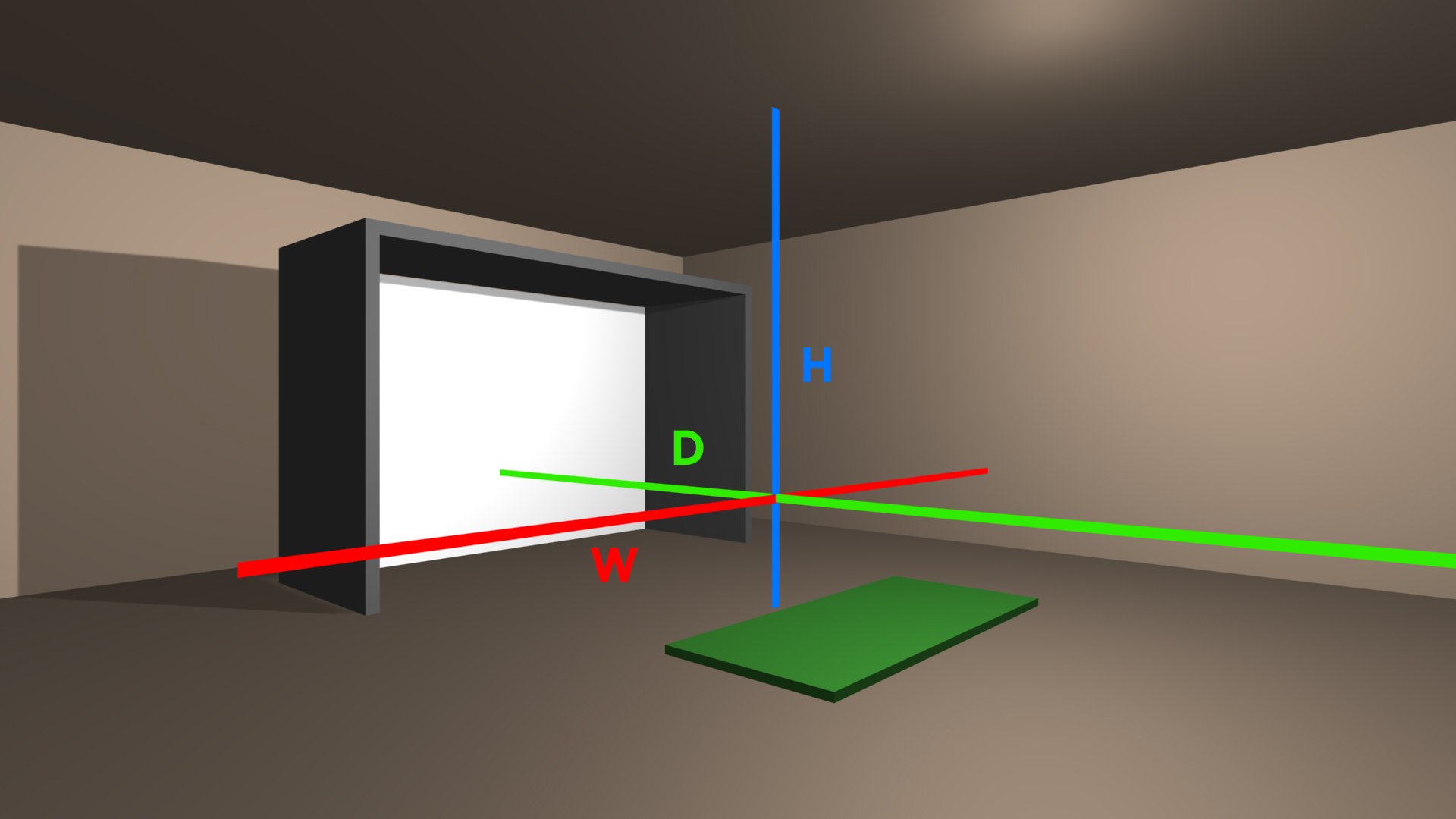
• ~20 feet of depth
• ~15 feet of width
• ~10 feet of ceiling height
When these conditions are met, the space can support unrestricted swing mechanics and full system performance.
Most spaces fall outside of this range—where careful planning becomes essential.
What Your Space Reveals
After working through this guide, most spaces begin to reveal their constraints.
Some can support a full indoor golf environment. Others require tradeoffs that affect performance, comfort, or usability.
These limitations are not always obvious—and small miscalculations can change the entire outcome.
Structured Space Evaluation
Understanding your space is the first step.
Determining what it can actually support is where decisions become clear.
________________________________________________________________________
A structured evaluation considers how all variables interact.
___________________________________________________________________
The evaluation includes:
• Room dimensions and physical constraints
• Environmental conditions affecting performance
• System configurations aligned with those constraints
• Positioning and setup factors that influence outcome
All of these factors are evaluated against the level of performance you expect from the space.
__________________________________________________________________________________________________
The objective is simple:
To ensure any equipment decisions are based on what your space can realistically support—not assumptions.
ParVision operates as an independent golf studio advisory. We do not sell products directly or process payments. Manufacturer fulfillment, support, and warranty apply.